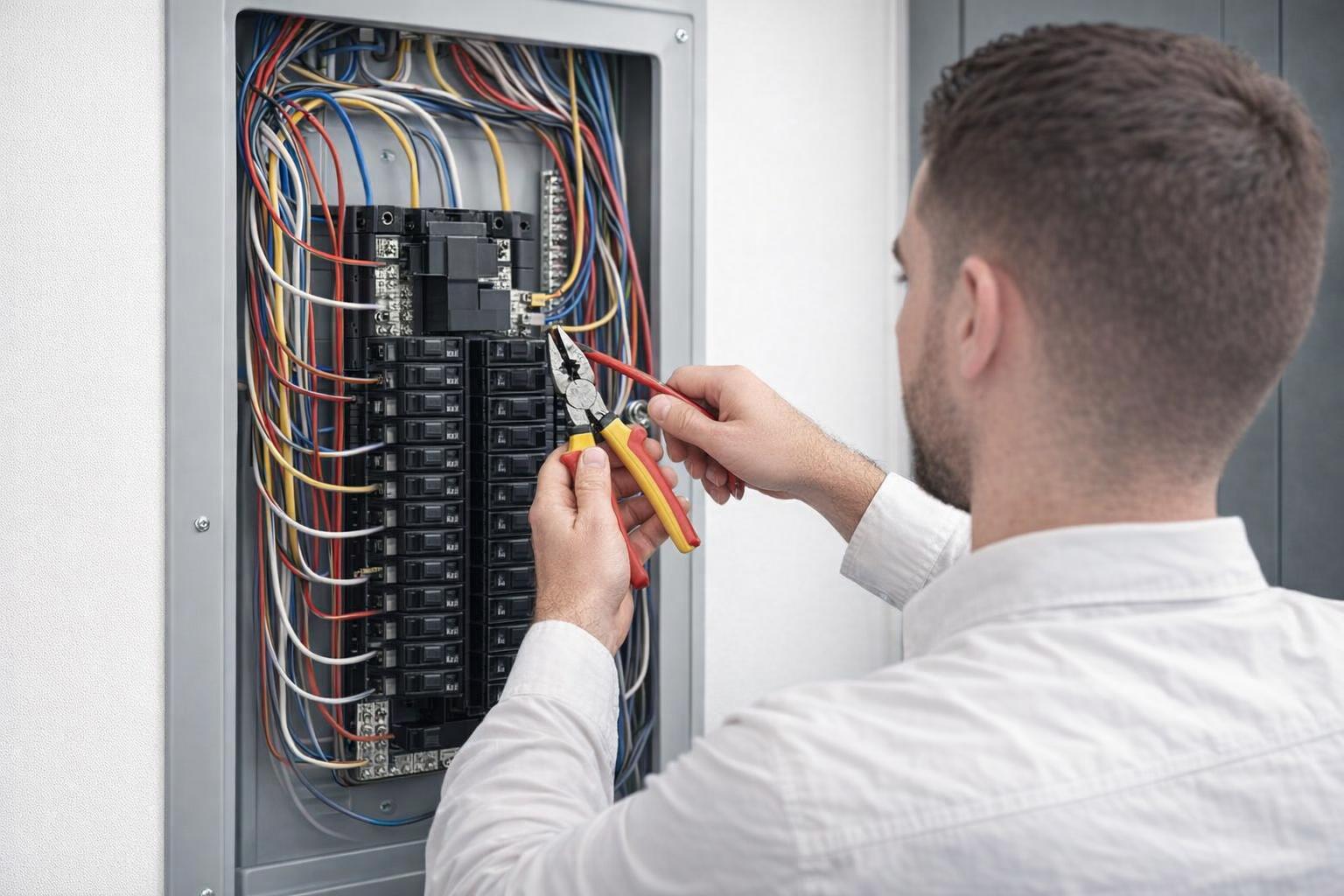
Upgrading your home's electrical panel boosts its capacity to handle increased demand. Before starting, a permit from Technical Safety BC is required, managed by a licensed professional who also arranges inspections. It's important to coordinate with the local utility when increasing amp service to ensure the supply lines are adequate. Any adjustments to the service entrance or mast should be discussed with the utility in advance. Proper planning guarantees a safe, compliant upgrade that supports heating, cooling, and other electrical needs.
Permit Requirements and Utility Coordination Process for Electrical Panel Upgrade
Upgrading an electrical panel in Langford, BC, requires careful attention to permits and coordination with local utilities. First and foremost, a provincial electrical permit is mandatory for any panel upgrade. This permit can be obtained by either the homeowner or a licensed electrical contractor before any work begins. The permit ensures that the upgrade complies with the Canadian Electrical Code and local municipal bylaws.
Electrical Panel Upgrade: Reasons for Upgrading From 100-Amp to 200-Amp Panels
Upgrading from a 100-amp to a 200-amp electrical panel is essential for modern homes in Langford, BC, due to increasing electrical demands. This upgrade accommodates electric heating, EV chargers, and modern appliances, ensuring safety and compliance with current codes. Below is a comparison of key factors to consider when deciding on this upgrade.
| Factor | 100-Amp Panel | 200-Amp Panel |
|---|---|---|
| Power Capacity | Limited to basic household needs | Supports high-demand appliances and future expansions |
| Permit Requirements | Standard provincial permit | Mandatory provincial permit and utility coordination |
| Installation Complexity | Less complex, fewer modifications | More complex, may require service line upgrades |
| Cost Estimate | Lower initial costs, around $3,000 | Higher costs, typically $6,000 or more |
| Safety Features | Basic safety features | Includes AFCI and GFCI breakers for enhanced safety |
| Final Inspection | Standard inspection | Comprehensive inspection for code compliance |
Pro-Tip: Before upgrading to a 200-amp panel, thoroughly assess both the service lateral (the wires running from the utility pole or transformer to your home) and the utility-side equipment. Many homeowners overlook that these components may not be rated for higher amperage, and simply installing a larger panel without upgrading the service lateral or coordinating with your utility provider can create safety hazards, code violations, or even void your insurance. Always consult with your electrician and contact your utility company early in the planning process to determine if the existing service lateral and meter base can handle the increased load, or if they require replacement or reinforcement. This proactive step ensures your upgrade is safe, compliant, and avoids costly delays or rework.
Electrical Panel Upgrade: Final Inspection to Ensure Code Compliance
After completing an electrical panel upgrade, a final inspection is crucial to ensure compliance with local codes and safety standards. This inspection is conducted by a provincial safety officer from Technical Safety BC, who verifies that all work meets the requirements of the Canadian Electrical Code and any specific municipal bylaws enforced by the City of Langford.
- Panel Installation: The inspector will check that the new panel is properly installed and securely mounted, ensuring it is accessible for future maintenance.
- Grounding and Bonding: Compliance with current grounding and bonding standards is essential. The inspector will verify that the grounding electrode system is up to code, especially in older homes where these systems may be outdated.
- Breaker Requirements: The installation of Arc-Fault Circuit Interrupters (AFCI) and Ground-Fault Circuit Interrupters (GFCI) is mandatory for specific circuits. The inspector will ensure these breakers are correctly installed to enhance safety.
- Load Capacity: The inspector will review the load calculations to confirm that the new panel can handle the electrical demands of the home, particularly with the increasing use of electric heating and cooling systems.